
When the modern observer thinks of entrepreneurship, the mind often drifts toward glass-walled offices in Silicon Valley, fledgling social media agencies, or boutique artisanal coffee roasters. While these ventures are certainly part of the economic fabric, they represent only a thin sliver of the actual diversity found within small enterprises. The true backbone of the global economy is comprised of “invisible” industries—the specialized, high-utility, and often gritty businesses that ensure our infrastructure holds firm, our logistics flow smoothly, and our most essential needs are met during life’s most challenging moments.
This deep dive explores the vast landscape of small businesses that operate outside the digital spotlight. These enterprises often boast higher barrier-to-entry moats and more resilient profit margins than their trendier counterparts. By examining the operational strategies and hidden complexities of these sectors, we can learn valuable lessons about sustainability, specialization, and the enduring power of localized service.
Beyond the Tech Bubble: Embracing High-Utility Niches

The glamorization of the “startup” has led many aspiring entrepreneurs to overlook industries that are perceived as unglamorous or traditional. However, the diversity of small enterprises is most vibrant in fields that provide indispensable utility. These businesses do not rely on viral trends; they rely on the fundamental physics of daily life. Whether it is moving heavy material, maintaining climate control, or managing the aftermath of a storm, these businesses provide solutions to problems that cannot be ignored or “disrupted” by a simple smartphone app.
The resilience of these businesses often stems from their essential nature. In economic downturns, a consumer might cancel a streaming subscription, but they cannot ignore a leaking roof or a legal emergency. This “essentialism” creates a stable floor for revenue that many venture-backed companies envy. Throughout this article, we will unpack how different niches leverage their unique positions to build lasting wealth and community impact.
Mastering High-Stakes Logistics and Fleet Management
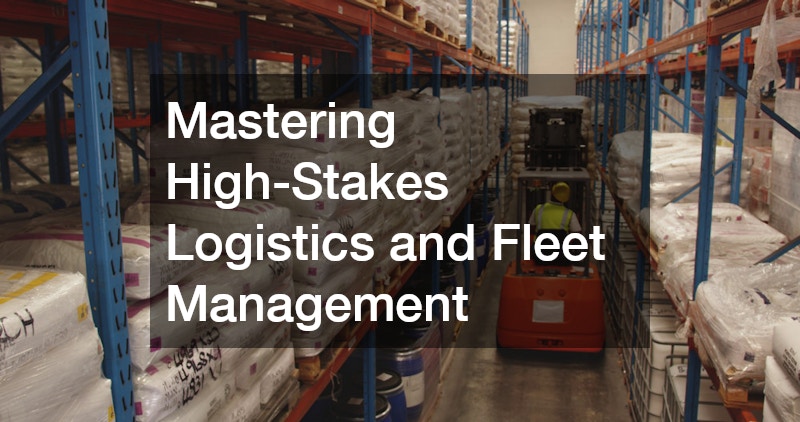
Logistics is often the silent pulse of a city. For many small business owners, success is defined by how efficiently they can move large assets or groups of people from point A to point B. This requires a sophisticated understanding of route density, maintenance schedules, and liability management.
Optimize Your Route Density to Maximize Margin
One of the biggest silent killers of profit in mobile service industries is travel time. To combat this, successful owners implement geographic “clustering.” By limiting service to specific zones on certain days, you reduce fuel consumption and wear and tear on your vehicles.
-
Implement Automated Dispatch: Use software that calculates the most efficient path for your fleet, ensuring that drivers aren’t crisscrossing town unnecessarily.
-
Tiered Pricing for Remote Areas: If a client falls outside your high-density zones, implement a “zone fee” to cover the opportunity cost of the travel time.
The diversity here is vast. Consider the complexity of managing limousine companies, where the expectation is zero-defect service and immaculate timing. On the other end of the spectrum, dumpster rental businesses must manage heavy equipment, environmental regulations, and the logistical nightmare of fluctuating landfill fees. Both require a mastery of fleet health and scheduling.
Diversify Your Inventory for Year-Round Demand
In asset-heavy businesses, equipment that sits idle is a liability. If your primary revenue stream is seasonal, look for ways to repurpose your fleet. A vehicle used for luxury transport in the summer could potentially be marketed for corporate long-distance shuttles during the off-peak wedding season.
The Precision of Specialized Trade Services
Technical expertise is perhaps the strongest “moat” a small business can build. When a task requires specialized training, expensive equipment, or high-stakes precision, the competition thins out significantly. This is where we see the “blue-collar elite” thriving.
Invest in Future-Proof Training and Equipment
The trades are evolving. A modern HVAC company is no longer just about fixing heating and air conditioning; it’s about indoor air quality, smart home integration, and energy efficiency. Staying ahead of the curve requires constant reinvestment.
-
Certifications as a Sales Tool: Display your certifications prominently. In technical fields, credentials are the shorthand for trust.
-
Adopt Advanced Fabrication: Using a precision water-cutting company for custom parts can significantly reduce time spent on manual modifications during a job, resulting in a cleaner finish and faster turnaround.
Implement Predictive Maintenance as a Service (PMaaS)
Instead of waiting for a client’s system to fail, sell them peace of mind. By using sensors or scheduled diagnostic visits, you can catch issues before they become emergencies. This transforms a one-off repair business into a recurring revenue powerhouse. Clients are often willing to pay a monthly or annual retainer if it means avoiding a catastrophic failure in the middle of a winter storm or a production deadline.
Supporting the Agricultural and Industrial Backbone

Much of our world’s stability relies on the heavy lifting done in rural and industrial corridors. These businesses often deal with massive scale, from earth-moving projects to the storage of the nation’s food supply.
Master Local Regulatory and Safety Compliance
In heavy industry, your safety record is your most valuable marketing asset. Large corporate clients or government entities will not even consider a bid from an excavation business if they don’t meet rigorous safety standards. You should treat compliance not as a hurdle, but as a competitive advantage.
-
Safety First Documentation: Keep impeccable records of every safety meeting and equipment inspection.
-
On-Site Training: Don’t just send employees to a classroom; perform regular on-site drills to ensure safety protocols are second nature.
Build Trust Through Specialized On-Site Reliability
Reliability in remote or agricultural settings is paramount. For example, grain bin services are critical during harvest time when every hour of downtime translates to thousands of dollars in potential loss. Building a reputation as the “first responder” for these structures ensures that you are the only call a farmer makes when the pressure is on.
Navigating High-Sensitivity Service Niches
Some of the most profitable small enterprises operate in sectors that people hope they never have to use. These businesses require a unique blend of legal knowledge, emotional intelligence, and rapid response. They handle the “friction” points of society.
Actionable Tip: Digitize Your Intake and Inquiry Process
In high-stress situations, the first business to answer the phone or respond to a message usually gets the job. This is particularly true for local bail bond companies, where a family member is often in a state of panic and looking for an immediate solution. By using automated intake forms and 24/7 answering services, you ensure that no lead is lost, regardless of the hour.
Focus on Reputation Management and Community Networking
In sensitive industries, word-of-mouth is everything. A headstone company, for instance, isn’t just selling a product; they are helping a family memorialize a loved one. The level of care and empathy shown during the sales process will dictate the referrals for years to come. Networking with funeral homes and legal professionals can create a steady stream of “warm” leads that trust your expertise before they even meet you.
Conquering Seasonality in Facility Management

Seasonality is the greatest challenge for many small enterprises. The ability to pivot your workforce and your marketing efforts based on the calendar is the difference between a business that survives and one that thrives.
Pivot Your Workforce Between Seasonal Demands
Many owners manage seasonality by having a “dual-identity” business. A company that spends its summer providing landscaping and outdoor maintenance can easily transition into a leader among snow removal companies during the winter months. This keeps your best employees on the payroll year-round, preventing the loss of talent to competitors during the off-season.
The same logic applies to indoor facility care. While commercial cleaning companies might have steady contracts, they often see surges in “deep clean” requests during certain times of the year. Preparing your staff to handle these high-intensity windows ensures you can maximize revenue when demand peaks.
Sell Multi-Year Service Contracts
To stabilize cash flow, move away from per-visit billing and toward annual or multi-year agreements. This allows you to project your revenue with much higher accuracy. It also makes your business much more attractive to potential buyers or lenders, as “contracted revenue” is viewed as much lower risk than “discretionary revenue.”
-
Performance Guarantees: Include specific KPIs in your contracts (e.g., “Response time under 4 hours”) to justify a premium price.
-
Automated Billing: Set up recurring ACH payments to ensure you aren’t chasing checks every month.
The Financial Mechanics of the Small Enterprise
Understanding the math behind these diverse businesses is crucial. Often, these companies operate on a “High Unit Margin” model rather than a “Massive Volume” model. Because the services are specialized, the price elasticity is often lower—meaning you can raise prices without losing a significant portion of your customer base, provided the quality remains high.
Consider the formula for Profit ($P$):
$P = (V \times (R – VC)) – FC$
Where $V$ is volume, $R$ is revenue per unit, $VC$ is variable costs, and $FC$ is fixed costs. In many of the niches discussed, the key to success isn’t necessarily increasing $V$ to infinite levels, but rather optimizing $R$ by offering specialized expertise and minimizing $VC$ through the logistical efficiencies mentioned earlier.
Building a Culture of Excellence in Traditional Roles
One of the most overlooked aspects of diverse small enterprises is the human element. Managing a team of technicians, drivers, or laborers requires a different leadership style than managing a creative team in a marketing firm. It requires a culture of “Extreme Ownership.”
-
Clear Standard Operating Procedures (SOPs): In high-risk or high-precision jobs, there is no room for ambiguity. Every task, from how a truck is loaded to how a client is greeted, should be documented.
-
Incentive Alignment: Tie employee bonuses to safety records, customer reviews, and equipment longevity. When the crew feels like they share in the success of the business, they treat the equipment with more care and the customers with more respect.
-
Professionalism in “Dirty” Jobs: You can stand out in a traditional industry simply by being the most professional. Branded uniforms, clean trucks, and polite communication go a long way in industries where the bar for customer service is often set low.
The Role of Technology in “Old School” Businesses
The true diversity of small enterprises today is seen in how traditional businesses are adopting cutting-edge tech. We are seeing drone inspections for silos, AI-powered routing for delivery fleets, and sophisticated CRM systems for local service providers. Technology is not replacing these businesses; it is acting as a force multiplier for their existing expertise. The most successful entrepreneurs of the next decade will not be those trying to invent the next social network, but those who take modern technology and apply it to an industry that has been operating the same way for forty years.
The Competitive Moat of Local Presence
Finally, the most significant advantage a small enterprise has is its proximity to the customer. Large national chains often struggle with the “last mile” of service and the nuance of local conditions. A local owner knows the soil types for an excavation project, the specific weather patterns for snow removal, and the local regulations that a national provider might overlook. This local “intellectual property” is a powerful defense against larger competitors.
The Strength of the Diverse Economy
The true diversity of small enterprises is found in their ability to adapt, serve, and endure. By looking past the surface of the “startup” world, we find a rich ecosystem of specialists who keep our society functional. These businesses may not always be the subject of front-page tech news, but they offer some of the most stable and rewarding paths to entrepreneurship available today.
Whether it is through mastering the logistics of a fleet, the precision of a technical trade, or the emotional complexity of a sensitive service, these entrepreneurs demonstrate that value is found in solving real-world problems with consistency and care. For those looking to start or grow a business, the lesson is clear: look for the gaps in your local economy, find the essential tasks that others find too difficult or unglamorous, and apply the principles of modern efficiency to them. The diversity of the small business world is not just a statistic—it is a testament to human ingenuity and the enduring value of a job well done.